
The gold standard, sharpened
When HumaNex A1c becomes HumaNex A1c Variant: still the HPLC gold standard — now with eyes for hemoglobin variants, higher precision, and everyday operational details that make the choice obvious.
The epidemic that doesn't knock
Diabetes doesn't announce itself. It arrives in silence — and by the time we notice, it has already left its mark on bodies, on healthcare systems, and on the global economy.
Deaths due to diabetes and high blood glucose.
Deaths caused directly by diabetes.
Diabetes is the most deadly non-communicable disease in people under 60. In the next 20 years, the number of patients will grow in most countries — making early diagnosis and precise monitoring a mandate of our time.
HbA1c — the film of blood glucose
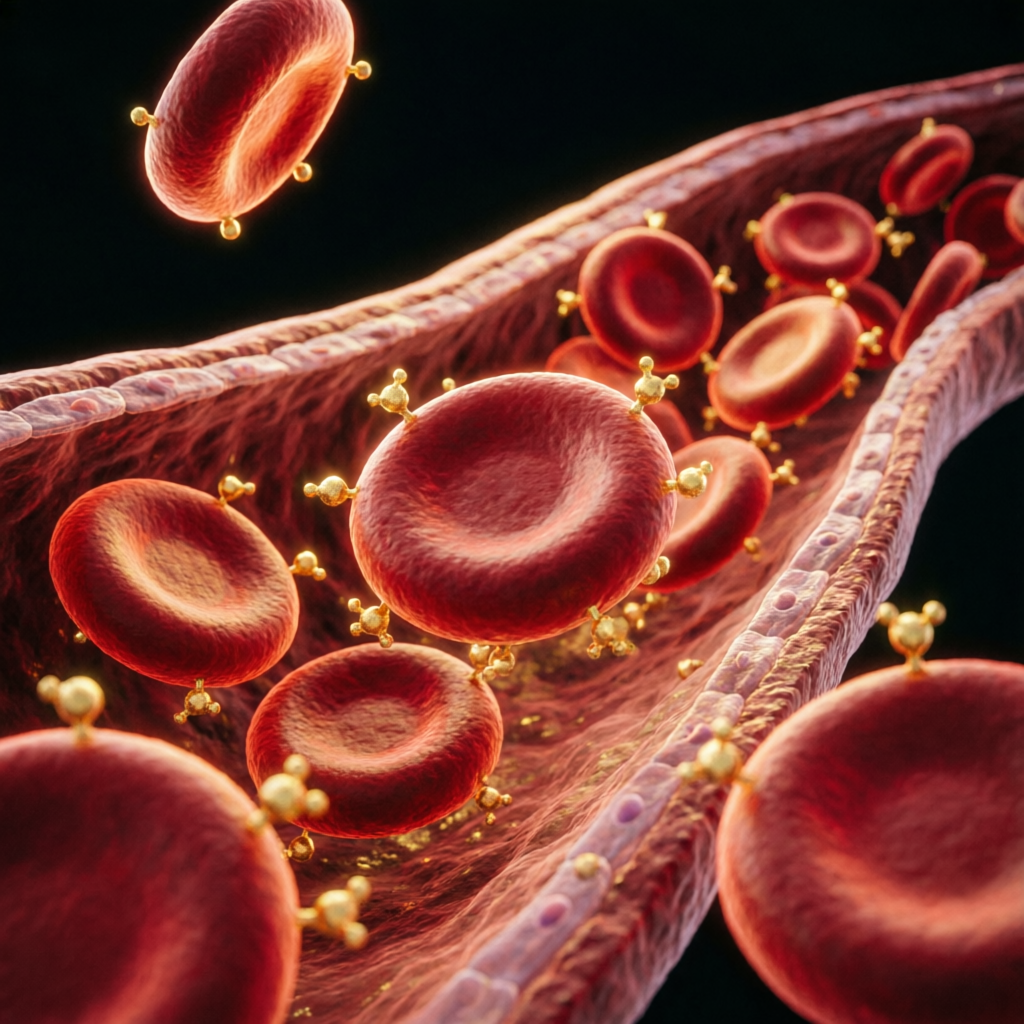
Glucose moves freely between plasma and red blood cells. When it meets hemoglobin, it binds irreversibly — a process called glycation, and the product is HbA1c. The higher the blood glucose, the more HbA1c is formed.
Because red blood cells live for 8 to 12 weeks, HbA1c reflects the average glucose level over that entire stretch — not a single moment like a glucose test. If glucose is a snapshot, HbA1c is the whole film.
In 1968, Samuel Rahbar discovered the link between HbA1c and diabetes. The ADA recommends HbA1c for diagnosis, and the WHO adopted the recommendation in 2011. Today, HbA1c is indispensable for monitoring long-term glycemic control.
- ✓No fasting or timed samples needed — patient compliance is encouraged.
- ✓Substantially less biologic variability and pre-analytic instability than glucose.
- ✓Relatively unaffected by acute perturbations such as stress or illness.
- ✓A better index of overall glycemic exposure and long-term complication risk.
A glucose test tells the story of a moment. HbA1c tells the story of a season.
Why 1% HbA1c matters
Every 1% pushes complications further away
HbA1c is not just a lab value. It is the steering wheel of therapy — and the reason measurement quality must be assured for years.
The clinical HbA1c scale
Click each range to see its clinical meaning — from normal to diagnostic thresholds and treatment targets.
HPLC — why the "gold standard"?
When a single HbA1c number follows a patient for years, even decades, and drives treatment decisions — that number has to be trustworthy. That is why the world chose HPLC.
There are many routes to HbA1c: ion-exchange chromatography (HPLC), capillary electrophoresis, boronate affinity, immunoassays, enzymatic assays. Each has its place. But when it comes to precision, reproducibility, speed — and seeing the complete hemoglobin picture — ion-exchange HPLC stands as the benchmark.
HPLC is purpose-built for HbA1c, delivers outstanding performance, and is used by numerous reference laboratories in the NGSP network. That is not praise — it is independent, repeated verification, year after year.
Because HbA1c results guide long-term treatment decisions, assay quality must be NGSP & IFCC certified and traceable to the DCCT reference method. HPLC meets that demand in full.
Separation by charge — the gold standard
Ion-exchange HPLC separates hemoglobin fractions by charge differences, delivering high resolution, stable results, and — critically — the ability to detect common hemoglobin variants. It is the technique trusted by NGSP reference labs, and the foundation of HumaNex A1c Variant.
Antigen–antibody reaction
Turbidimetric inhibition immunoassays run directly on clinical chemistry analyzers — no extra analyzer needed. Good performance and flexibility for labs integrating HbA1c into an existing menu, but no chromatogram and no variant visibility.
The point-of-care benchmark
Boronate affinity delivers results in just 4 minutes from fingertip or venous whole blood and is unaffected by common Hb variants — ideal for testing at the patient's side. It does not, however, "see" variants on a chromatogram.
Specific enzymatic reaction
Enzymatic assays are an alternative running on clinical chemistry analyzers — a straightforward chemical solution for labs that want HbA1c without a dedicated system.
Separation by charge & size
Capillary electrophoresis offers high-resolution separation — an advanced technique used in certain reference systems and research settings.
HbA1c is listed on the WHO Model List of Essential In Vitro Diagnostics for both diagnosis and monitoring — from primary healthcare to clinical laboratories, on handheld, small and automated analyzers.
Diabetes should be diagnosed when A1c ≥ 6.5%. If A1c testing is not possible, previously recommended methods (FPG / 2HPG, with confirmation) are acceptable.
Assay quality must be traceable to the DCCT reference method, with independent NGSP & IFCC certification — ensuring results remain reliable across a lifetime of treatment.
HumaNex A1c Variant — a deliberate upgrade
HumaNex A1c is now succeeded by HumaNex A1c Variant. Not just a name change — a more efficient, more tactical generation of HPLC: same gold standard, but seeing more, measuring more precisely, and operating more like real lab life.
 130 s per test
CV < 1.5%
Variant detection
130 s per test
CV < 1.5%
Variant detection
Same gold standard — plus a clinical pair of eyes.
HumaNex A1c Variant is an analytical system based on ion-exchange high performance liquid chromatography (HPLC) for the quantitative determination of the ratio of glycated hemoglobin (HbA1c) to total hemoglobin in EDTA whole blood or fresh venous blood. In combination with further components of the HumaNex System, it aids the diagnosis of (pre-)diabetes and helps monitor and manage diabetes mellitus and long-term glycemic control.
What makes the Variant tactical is this: the instrument doesn't just return an HbA1c number — it shows the complete chromatogram, detecting common hemoglobin variants such as HbS, HbD, HbC and HbE, so labs and physicians never miss a complex specimen.
From HumaNex A1c to HumaNex A1c Variant
The upgrades that matter most in the new generation.
2021
Performance proven — not promised
HumaNex A1c Variant is certified by NGSP and IFCC every year, earning a Silver Rating in 2021. Clinical evaluation shows excellent agreement with market-leading systems. For the lab, that means: the same certified result quality — plus variant detection and a modern operating experience.
| Method | Ion-exchange HPLC — the gold standard |
| Intended use | Quantitative determination of the HbA1c / total Hb ratio in EDTA whole blood or fresh venous blood; aid in the diagnosis of (pre-)diabetes and monitoring of long-term glycemic control |
| Throughput | 20 samples/hour · HbA1c result in 130 seconds |
| Autoloader | 10 samples · tube detection · cap piercing |
| Sample volume | 10 µl (diluted) · 1.5 ml (EDTA whole blood) |
| Measuring range / precision | 3–18% NGSP · CV < 1.5% |
| Variant detection | Yes · common variants HbS, HbD, HbC, HbE |
| Reporting | HbA1c NGSP %, IFCC mmol/mol, eAG (ADA); HbA1a, HbA1b, HbF, LA1c, HbA0, variant window |
| Reagents / column | Reagent kit 200 tests (REF 16195) · column 1,600 tests (REF 16190/10) · order column and reagent separately |
| Operation | High-resolution touchscreen · state-of-the-art software · automatic bubble elimination · barcode sample identification |
| Certification | NGSP & IFCC certified each year · Silver Rating 2021 |
Professional note: HumaNex A1c Variant detects common hemoglobin variants and displays them in the chromatogram. However, in patients with variants that alter red blood cell lifespan, the usual HbA1c cut-offs may no longer apply; physicians should interpret results carefully and may use fasting plasma glucose (FPG) instead.
Not just right — complete enough to decide
An HbA1c number is not enough when the specimen carries a hemoglobin variant. Variant detection is the "seeing" part that makes HumaNex A1c Variant the more tactical choice for a modern lab.
The chromatogram — when the instrument tells more than a number
Inherited hemoglobin mutations
HbE, HbD, HbS and HbC are the major ones among thousands of rarer pathological hemoglobin variants. They often go undetected — or manifest in reduced Hb functionality and complications such as anemia.
Red blood cell lifespan changes
Variants often have a hugely shorter RBC lifespan. Since the 6.5% HbA1c cut-off (WHO suggestion) depends on RBC lifespan, fasting plasma glucose should be used instead — doctors need to know.
See it, don't miss it
The NGSP tracks the methods and instruments that report accurate HbA1c in the presence of variants. The HumaNex A1c Variant is able to detect those variants, too — and shows them in the chromatogram.
Why the Variant is the tactical choice
Same certified quality, better usability
- 130 s/test vs ~180 s/test cycle.
- 20 samples/h vs 18 samples/h.
- 4,000+ results stored vs very limited storage.
- 12-week reagent stability vs 8 weeks.
- Integrated printer vs optional item.
- 1024×600 touchscreen vs a small screen; whole-blood column activation vs primer needed.
- Same external quality certification process — NGSP/IFCC, Silver Rating for the Variant.
Simplify inventory & experience
- Complete kits vs many single items (eluent A, B, C, washing solution…) — troublesome inventory management.
- Modern touchscreen while Arkray still uses a numerical keypad.
- Up to 20,000 results stored vs ~900-test limited storage on the HA-8180V.
- Flexible packaging: order column and reagent separately to optimize costs.
HPLC gives the whole picture
- HPLC detects and separates HbA1c directly — boronate affinity only calculates it from a glycated peak.
- HbF has a much lower glycation rate than HbA — boronate methods can read lower in samples with HbF.
- Clinical chemistry may be cheaper at very high volumes, but usually carries a higher CV% and returns just a number — no chromatogram, no variants.
"I just want HbA1c results — variants? I don't care."
"A 10-sample autoloader isn't enough for my lab."
"Clinical chemistry is cheaper than HPLC."
"Is variant detection really necessary?"
One portfolio — from fingertip to gold-standard lab
HumaMeter A1c
Boronate affinity — the benchmark for POCT. Results in 4 minutes from 4 µl of blood, unaffected by Hb variants.
- < 15 tests/day
- CV < 3% at 7% A1c
- Range 4–15% A1c (20–140 mmol/mol)
- NGSP & IFCC, traceable to DCCT
HumaNex A1c Variant
Ion-exchange HPLC, fully automated. The gold standard for HbA1c — now with variant detection and higher precision.
- 7–60 samples/day (market: 10 to ~80)
- 20 samples/h · 130 s per test
- CV < 1.5% · 3–18% NGSP
- Variant detection · NGSP/IFCC · Silver 2021
HumaStar Series
Turbidimetric inhibition immunoassay on HUMAN chemistry analyzers — no extra analyzer needed.
- Runs on HumaStar / HumaLyzer systems
- Integrates into the existing lab menu
- No variant detection
- NGSP & IFCC certified
HumaNex A1c Variant doesn't just answer "what is the HbA1c?" — it answers "is this result safe to trust?"
HumaNex A1c Variant — in a nutshell
Ready to upgrade your lab to the Variant generation of HPLC — more efficient, more tactical, more confident?